
Your Complete Office Move Checklist: A Step-by-Step Guide for Australian Businesses

Strategic Office Move Planning for a Seamless Transition

Relocating your office is more than just packing boxes; it's a business relocation planning process that requires detailed coordination and foresight. Whether you're moving office across the city or shifting your entire operation to a new region, having a solid office move checklist is essential to avoid disruptions and maintain productivity.

Our office move planning checklist covers every step, from initial budgeting to setting up your new workspace. With years of experience in corporate move planning, we understand the unique challenges businesses face when moving business premises. That’s why we focus on a smooth, structured approach that aligns with your timeline, budget, and business continuity needs.

Some of the key things to consider when moving business premises include IT infrastructure, employee communication, legal notifications, and furniture logistics. Each of these aspects is covered in our moving business location checklist, ensuring that nothing falls through the cracks.

For companies undergoing a large-scale business relocation, our business relocations checklist is designed to minimise downtime. We also provide expert support in office move coordination, working closely with internal teams and third-party vendors to execute a streamlined transition.

Whether you're planning a small office move or a full workplace relocation, our resources and team are here to guide you. With our comprehensive planning an office move checklist, you can transform what might feel like a daunting task into a strategic move that supports growth and efficiency.

So if you’re considering moving offices or need help defining your business moving strategy, get in touch with our relocation experts today. We’ll help you turn your office move into an opportunity for improved space, workflow, and performance.

If moving house is one of the top five most stressful events in a person’s life, just imagine what the stress levels are like when it comes to moving your office.

While moving  an entire office is a significant undertaking, by planning carefully and breaking the process down into small, manageable chunks, you can have an easy transition, with minimal disruptions and associated costs.

That’s why we’ve put together this super-handy checklist, so you don’t miss a thing while you move your office from one place to another. It seems like a simple task but involves number of steps to be taken in order to ensure that everything is fine.

With an office  relocation, there are many moving parts. It’s important, therefore, to get your ducks in a row as early as possible. Careful planning and preparation can help ensure the office move is not just smooth, but that it actually benefits your organisation in the long term.

12–18 months before the move

  • Determine what your key objectives are for your move (e.g. do you want to reduce costs, boost productivity or attract top talent?)
  • Find an expert: a workplace design partner to help you with a workplace design strategy to identify your key objectives and determine the future way of working for your company. This will determine how much space you will actually need.
  • If based on the above, the decision is made to relocate:
    • Look into your current lease and determine how and when to give notice to your landlord. (If you need to vacate your current premises before the lease is up, you may need to sublet or assign the lease to another tenant or negotiate a termination. You may want to seek advice from a property solicitor to work out what may be the best option for you.)
    • Do you have a make-good obligation? Consider the budget for this and adequate timing to have it completed
  • If the desired outcome is to create significant change in the environment, then refer to your workplace design partner for a change management program to ensure all staff are brought on the journey
  • Conduct a location feasibility study of shortlisted sites to determine the most suitable space – your workplace design partner can also assist with this

6-12 months before the move

  • Negotiate and finalise the terms of your new lease
  • Put together a detailed timeline to ensure the move is completed on time
  • Liaise with the building manager at the new property to help determine the layout
  • Create an inventory of your existing furniture and fittings, and determine what will be moved to the new office, and what new furniture and fittings will be required
  • Involve IT with your workplace design partner to perform an audit of your current IT and communications systems (computer, photocopies, phones, etc.), and determine what equipment will be kept and what needs to be upgraded. (It is essential that all your IT equipment, systems and phones are all fully functional on the day you move in to ensure minimal disruption.)

3-6 months before the move

  • Select a moving day
  • Devise a detailed moving budget (for moving costs only, separate to your relocation budget)
  • Schedule wiring and cabling of all computers and phone lines
  • Create a master change-of-address list, listing clients, vendors and suppliers that will need to be notified of your new details and order new stationery
  • Hire a professional moving company
  • Hire a professional cleaning service for the vacated property
  • Create a company moving team, ideally with a representative from each department, to help coordinate the move across the organisation
  • Depending on the extent of the change, ensure the staff are regularly informed about and involved in the moving process, in conjunction with the change management program (if applicable)
  • Keep a hand in with your workplace design partner, ensuring everything is going in the direction you need it to

1 month before the move

You’re on the home stretch! This is the time to make sure things are still on track, and to double (and triple) check nothing has inadvertently been left by the wayside.

  • Hold a meeting at the new premises with all the parties involved (design/construction/movers/IT etc.) to ensure all details have been covered and responsibilities for the upcoming weeks are clear
  • Put together a welcome pack for employees, outlining information about the building and the neighbourhood, so employees can quickly settle in
  • Organise an office warming party to welcome employees to the new office
  • Finalise employee seating plan
  • Implement a clean-up program (purging files, disposing of rubbish, moving old files to storage etc.)
  • Back-up business operations
  • Acquire packing supplies for the move
  • Create a detailed moving day plan
  • Reserve loading dock and elevators, and acquire any necessary permits (such as parking)
  • Sort out keys and access cards
  • Start setting up IT and communications systems
  • Give staff a tour of the new premises, so they know what to expect when they arrive on day one

On the day

The big day is here. While much of the work will be in the hands of professionals (thanks to all your careful planning), you’ll still need to be keeping an eye on things and ensuring everything’s ready to go when employees walk in the door.

  • Arrange with the building manager to have air conditioning switched on prior to entry (this will make the day much more comfortable!)
  • Ensure workstations are assembled and correctly labelled with numbers or employees’ names, so employees can easily find their desks
  • Test computers, phones, internet, and other technologies to ensure everything is connected and working properly
  • Ensure old site has been cleaned thoroughly
  • Ensure the new site is clear of excess furniture, crates and packing materials

After the move

Hooray! The hard part’s over. Now it’s time to tie up any loose ends, let your clients know about your new location, and reap the benefits of a brand new office.

  • Brief staff on new premises, such as workspaces, break areas and amenities
  • Distribute welcome packs and new phone lists
  • Address any residual issues reported by staff
  • Confirm termination of the old lease
  • Schedule press release and client announcement
  • Review office fitout and design, and track relevant metrics to see if key objectives are being met

As you can see, moving an office is a lot of work! That’s why you want to ensure you reap maximum benefits from it. To help your business get to the next level, choose a workplace design partner that can help you achieve your objectives and prepare your new space for you. To learn more, download our free ebook How to choose a workplace design partner now.
 

How to choose a workplace design partner ebook

Axiom Workplaces combine your commercial fitout goals with our experience and expertise in evidence-based office design to create a thriving workplace for you and your workforce.
 

Comprehensive Office Relocation Planning & Checklist for Australian Businesses

Relocating a workplace is a significant step for any organisation, and having the right plan in place makes all the difference. Whether you need an office relocation checklist, a business relocation checklist, or guidance for workspace relocation planning, the process should cover every detail from start to finish.

A well-prepared office relocation planning checklist includes timelines, budgets, IT coordination, and change management. Many companies also need a checklist for office relocation that covers lease obligations, furniture moves, and communications. For those setting up a new space, a setting up a new office checklist ensures your operations start smoothly on day one.

Larger moves may require corporate relocation planning or executive office moving support, while specialist sectors benefit from legal office relocation services. Our team offers professional relocation planning and corporate move coordination so you can focus on running your business.

Technology is a key consideration, which is why we provide an office relocation IT guide as part of our planning. This ensures networks, phones, and systems are ready on arrival. We also advise on office fit out checklists to help you make the most of your new space.

From moving business premises checklists to relocating a business checklists, our goal is to streamline the process. We assist with business move coordination, office shifting, and corporate office relocation projects across Australia. Our office move planning guides and relocation checklists Australia are designed to reduce downtime and stress.

If you’re unsure when to hire an office moving company, or what to include in your office moving list, we can guide you through every step. Whether you’re planning to move the office, move my office, or simply need advice on what to consider when planning an office move, our experts will ensure nothing is overlooked.

Conclusion

Relocating your office is more than just a change of address; it's an opportunity to reshape your workplace for greater efficiency, employee satisfaction, and long-term business growth. A well-planned move can enhance productivity, improve collaboration, and create a work environment that better reflects your company culture.

However, achieving these benefits requires more than simply transporting furniture and equipment. Without a detailed relocation checklist and expert coordination, the process can quickly become stressful, disruptive, and costly. That’s why careful planning, professional guidance, and attention to detail are critical at every stage.

At Axiom Workplaces, we remove the uncertainty and complexity from office relocation. Our approach combines strategic design insight, experienced project management, and tailored relocation expertise. Whether you’re moving within the same city or across the country, we ensure your transition is smooth, timely, and aligned with your business objectives.

Why Choose Axiom Workplaces for Office Relocation in Australia

We deliver complete corporate office relocation services designed to minimise downtime and maximise the value of your move. From initial planning to final setup, our team manages every detail so you can focus on running your business.

What sets us apart:

  • Full-service approach: We handle everything from relocation planning and lease advice to space design and fit out, ensuring a seamless process from start to finish.
  • Customised relocation checklists: Whether you’re relocating a small office or a large corporate headquarters, our checklists are tailored to your industry, size, and operational needs.
  • Specialist coordination: Our relocation experts manage IT systems, office furniture, AV equipment, and workplace design to ensure your new space is ready for use immediately.
  • Experience with complex moves: From executive office moving to multi-site corporate relocations, we have the expertise to manage high-level logistics and sensitive operations.
  • Nationwide service coverage: We provide relocation support for businesses in Sydney, Melbourne, Brisbane, Perth, and across Australia, ensuring consistency no matter your location.

Start your office and move the right way. Contact Axiom Workplaces today for a customised relocation strategy that keeps your business moving forward.

FAQs About Office Relocation in Australia
 

The ROI of Workplace Wellness: Insights from the experts

The ROI of Workplace Wellness: Insights from the experts (Part 2 of 2)

Workplace wellness is not only important for moral and ethical reasons, but financial reasons, too. In fact, a recent study found that every year, absenteeism costs the Australian economy an estimated $44 billion, while presenteeism (working at a reduced capacity) more than $35 billion.

So what are organisations doing to promote workplace wellness?

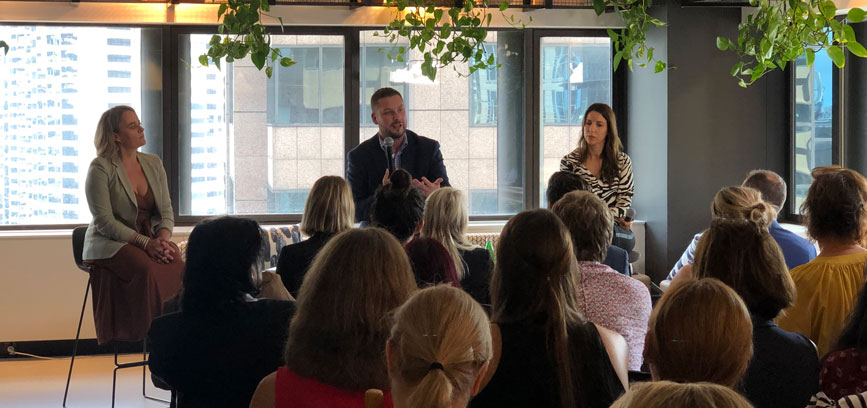
At our recent lunch and learn, we covered how organisations can produce the best bottom-line results through workplace wellness initiatives with our panel of experts:

  • Dr Debra Villar, Director at Complete Corporate Wellness, a company that provides health and wellness programs for the corporate sector.
  • Jack Noonan, Vice President Australia & New Zealand at International WELL Building Institute, which is leading the movement to promote health and wellness in buildings and communities everywhere through their cutting-edge WELL Building Standard™.
  • Annelie Xenofontos, Senior Workplace Strategist at Axiom Workplaces, who leads the strategic thinking process that creates intelligent workplace design outcomes for our clients.

Here’s what they had to say about wellness trends they were noticing in Australian workplaces.

How are buildings changing to support workplace wellness initiatives?

Circadian lighting

Noonan explains that 20 years ago, all offices were using bright, fluorescent lighting that didn’t change throughout the day, which led to a disruption of sleep at night.

This is why today, more organisations are using circadian lighting – that is, lighting that mimics your daily cycle. Lighting will mimic daylight midday, and become warmer in the afternoon as you finish work.

Most results are qualitative instead of quantitative, with organisations saying that staff are requesting circadian table lamps and more likely to use meeting rooms with circadian lighting.

End of trip facilities

Noonan explains that Australia is well ahead of the United States in terms of our end of trip facilities, simply because large developers and workplaces are willing to make end of trip facilities spacious enough for tenants to share and enjoy.

For example, the recently opened International Towers in Barangaroo boast the largest bike parking facility in the southern hemisphere, with room for over 1000 bicycles and more than 100 showers. This encourages cycling to work which not only reaps health benefits, but also environmental benefits.

How are organisations supporting nutrition?

Villar explains that some businesses go to the extreme by providing gourmet meals, which are pre-planned by a head chef – but not all businesses can afford this, so it’s more about providing healthy alternatives. If unhealthy snacks are available, you can place them on the bottom-shelf so that they’re not prominently promoted.

According to Noonan, 50% of food options should be fresh fruit and vegetables – or at the very least, organisations should provide two options of fruit and two options of vegetables. This is to ensure that making the healthier choice is the easier choice and that staff have options available.

Additionally, by simply providing inviting spaces for people to come together and eat, organisations are encouraging a balanced diet, as people tend to eat healthier when they eat together. A requirement of the WELL Building Standard is that there is space for at least 25% of employees to have lunch at any point in time. While it’s certainly an investment in real estate (as you’re sacrificing space that could be used as work stations), it’s an important factor for workplace wellness.

How are organisations supporting mental health?

According to Villar, 1 in 4 people in the world have a mental disorder but no one wants to admit it. Stigma prevents people with a known disorder to seek help from health professionals – even if treatment is available.

Movements like R U OK? Day help in supporting those who are struggling by inspiring people to start talking about mental health. Companies and other organisations are also doing their part in supporting mental health and creating a healthy workplace. Villar highlighted that a healthy company not only focuses on the health of an individual but on the health of the whole organisation.

A focus on taking action

Organisations are starting to go beyond the simple measurement of chronic diseases by implementing health programs that build fun and engaging workplaces.

Previous programs comprised mainly of checklists, and centred mostly on the measurement of data. Managers would tick boxes, analyse the data and conclude, for instance, that 10% of employees have a risk of diabetes. But these numbers have no value if they don’t help solve actual health issues and affect change.

Australian companies still conduct biometric testing for glucose and other health checks – but are beginning to move away from that and focus on fun and engaging activities like workplace challenges, team projects and treatment days.

Villar also mentioned that there are cost-effective ways to encourage employees to take the stairs, simply by making them more appealing. For example, you could allow people to draw artwork and write quotes along the wall near the staircase.

These activities actually make a difference in people’s health, instead of simply drawing conclusions around the percentage of staff that have chronic diseases.

Support the mental health of managers

More organisations are recognising the importance of supporting managers with the tools they need to support their own mental health, so that they can, in turn, support the mental health of their teams.

“It’s all well and good to provide education to staff around mental health, but if you’re not providing dedicated support to their managers so that they can walk the talk and inspire staff, then you’re missing an important point,” explains Villar.

Leaders need to have the necessary tools to deal with mental health issues, as they can be quite confronting.
Villar and her team provide a mental health first aid course for organisations – helping people recognise signs of mental disorders, what to do, and how to deal with those signs.

Focus on office design

Xenofontos explains that organisations are using office design to positively impact mental health. One example is through the use of open-plan offices.

She mentioned the experience of a person who worked in a law firm that had partitioned offices for every lawyer. Because of this, no one in the office noticed when one particular staff member was having a difficult time dealing with his wife’s illness and suffering from a mental health crisis. The fact that staff were separated by their own cubicles meant that he could come to the office before anyone arrived, and leave the office after everyone left – without anyone noticing.

Xenofontos stressed that if it was an open plan office, other staff would more likely notice the decline in his wellbeing, and offer some support. This is why it’s important to consider how office design can impact employee health and wellness.

A workplace design partner can help you build a healthier office for your managers and staff. To help you find the perfect one for your business, check out our free ebook, How to Choose the Right Workplace Design Partner.

Or if you’d like some free advice, why not meet with us and get a comprehensive design assessment and execution plan, obligation-free?

Axiom Workplaces combine your commercial fitout goals with our experience and expertise in evidence-based office design to create a thriving workplace for you and your workforce.
Improving employee health and wellbeing through workplace design

Improving employee health and wellbeing through workplace design

If you want your business to perform at its peak, then you need to ensure your employees can perform at their best, and this means looking after their health and wellbeing.

It’s important to bear in mind that employee health and wellness is not just about physical health, but also emotional and social wellbeing.

Prioritising employees’ health and wellbeing can have myriad benefits for your business, including:

  • greater productivity
  • reductions in work-related sickness and injuries
  • lower workers’ compensation costs
  • a decrease in absenteeism and staff turnover
  • improved employee satisfaction
  • enhanced corporate image

If improving employee health and wellbeing is an important goal for your business, one of the first things to look at is the environment in which your employees spend up to 40 hours (or more) a week.

Here are 5 ways you can improve employee health and wellbeing through your workplace design.

Encourage activity

You might have heard that “sitting is the new smoking”. Doctors have found that sedentary behaviour can be highly detrimental to health, leading to an increased risk of chronic health problems, such as heart disease, diabetes and cancer.

That’s why forward-thinking organisations are implementing ways to encourage movement and activity throughout the day. This could be by installing sit-stand desks, to encourage employees to stand more throughout the day; having standing meeting rooms; or even removing small personal printers and installing large shared printers, so workers have an excuse to get up on a regular basis.

Integrate nature, sunlight and fresh air

There’s ample evidence that integrating nature, sunlight and fresh air into the workplace can have positive effects on health and wellbeing, thereby boosting productivity. Indoor plants, for example, have been shown to lift people’s moods and even remove harmful chemical compounds in the air.

There’s also data that suggests air quality may have a much bigger impact than once thought. Harvard University professor Joseph Allen performed a study that showed that workers in ‘green’ buildings with enhanced ventilation scored 101% higher than those in conventional buildings.

Sunlight can also have a positive effect on workers’ productivity, with one study finding that workers who were exposed to more daylight during the working week slept longer, did more physical activity and had better quality of life than workers who had little exposure to daylight.

Consider how these elements could be integrated into your next workplace design. Could you, for example, install a ‘living wall’ to help decrease stress levels? Could you seat workers closer to windows so they get more exposure to daylight? Could you install an air ventilation system to ensure workers get plenty of fresh air throughout the day?

Promote rest and relaxation

Often at work, our days are so jam-packed that there’s barely time for a bathroom break, let alone a decent lunch. But having employees working as hard as they possibly can does not actually lead to more productivity. On the contrary, in fact – it can lead to chronic stress and employee burnout, resulting in lower levels of productivity.

That’s why it’s important that employees take regular breaks in order to recharge, clear their head and strengthen their focus.

If employees don’t have an appealing space where they can take a load off, it sends a message that taking breaks is frowned upon by upper management. Environmental cues, therefore, are a powerful way to encourage this healthy behaviour. Revamp your break area(s) by providing a variety of comfortable seating options, and using home- or café-inspired touches to make the space feel more inviting.

Factor in noise and acoustics

When considering a workplace redesign, it can be easy to get heavily focused on the visual aspects. But what about the acoustics?

Excessive noise levels at work can have a dramatic effect on employee health and wellbeing, causing disruptions and poor performance. One study has even shown it can lead to an increase in heart rate and blood pressure, resulting in more staff absenteeism. Workplace design that factors in noise management, therefore, can do much to contribute to workers’ comfort.

For example, if you are planning on an open-plan layout, you may want to help mitigate any potential interferences by installing closed rooms where people can conduct phone calls. If the space is large and potentially echo-ey, you could consider ways to absorb and block any excessive noise, whether it’s by utilising high-performance acoustic tiles or being mindful about how you use partitions, walls and windows.

Consider materials

We’ve already talked about the importance of air quality in a work environment – but did you know that just about everything around you could potentially be contributing to poor air quality?

Your carpet, paint, furnishings and office equipment (such as photocopiers) could all be emitting volatile organic compounds, or VOCs. VOCs have been shown to impair cognitive ability, including the ability to make complicated decisions, to focus and to problem solve. They can even potentially lead to health effects such as headaches, nausea and fatigue.

A workplace design should take into account workers’ exposure to VOCs by, for example, using low-VOC-emitting materials or being mindful about where office equipment like printers and photocopiers are located.

By putting employee health and wellbeing at the core of your next workplace design, you can not only have a more inviting and comfortable place to work, but you can also reap maximum ROI through boosted productivity levels. It’s a win-win!

A workplace design partner can help you develop a workplace design strategy that delivers maximum ROI. To help you find the perfect one for your business, check out our free ebook How to Choose the Right Workplace Design Partner. Download it now!

Axiom Workplaces combine your commercial fitout goals with our experience and expertise in evidence-based office design to create a thriving workplace for you and your workforce.
How to approach a strategy for a workplace design

How to approach a strategy for a workplace design

When the time rolls around for a brand spanking new office fitout, it can be easy to get distracted by what’s on the surface. What colour scheme will be the most appealing? What finishes will be the most chic? What furnishings best suit the available space?

In actual fact, while your office fitout can look fantastic, it can also deliver tangible benefits and measurable ROI – if it’s a strategically driven workplace design

Let’s take a closer look at what’s involved in a workplace design strategy, and why developing one is integral to your next office fitout.

What is a strategy for a workplace design?

Your business is driven by three things:

  • Your culture
  • Your employees
  • Your goals

These three things characterise your business, making it as unique as a fingerprint. It makes perfect sense, therefore, that your workplace design should be driven by these factors too.

A workplace design strategy places these all-important aspects at the core of a design concept, so that all other decisions are motivated by these factors. It relies heavily on extensive evidence about these elements, so you get a design that fits your organisation like a glove, rather than one that employees are forced to “get used to” over time. It also takes into account where the company is headed, ensuring the design remains highly functional years after the installation.

Here are the ways in which these three drivers can influence the strategy of your workplace design.

Workplace culture

Workplace culture encapsulates many aspects of an organisation: its values and beliefs; its personality; its traditions; its behaviours and its attitudes. A strong and positive workplace culture is a key business driver because it helps attract and retain top talent, increase employee engagement and satisfaction, and improve performance. According to a survey by Deloitte, 94% of executives and 88% of employees believe a distinct workplace culture is important to business success.

In formulating a workplace design strategy, a workplace design partner will collect extensive evidence about an organisation’s workplace culture in order to determine how the best aspects can be enhanced through the design, and how the not-so-good aspects can be minimised.

If, for example, creativity is a key characteristic of your business, you could nurture this by installing brainstorming rooms or flexible collaborative spaces where employees can feel free to unleash their imaginations.

Employees’ needs, habits and preferences

Any CEO will tell you that employees are a business’s most important asset. Therefore, any workplace design that is going to deliver maximum ROI needs to be highly people-centric (indeed, this is reflected in many of the office design trends we see sweeping Australia).

The beauty of a workplace design strategy is that is doesn’t make assumptions about what might work for employees; rather, it goes straight to the source in order to collect evidence to determine what will work for them. A survey might reveal, for example, that employees want more flexibility in the ways they work, and this could be factored into the design by providing a variety of workspaces.

Business goals

In the end, your organisation’s success boils down to one question: what is your business’s very purpose, and how do you plan to fulfil this purpose? Believe it or not, your workplace design can help you answer this question too.

Whether your goal is to foster better collaboration, increase innovation or improve employee health and wellness, these goals can be factored into the strategy of your workplace design, ensuring you maximise your ROI in every way possible.

What goes into the development of a workplace design strategy?

The development of a fully realised workplace design strategy entails several steps to ensure the final strategy successfully bridges both the ideological and practical aspects of the project. Here’s a glimpse into Axiom’s workplace design development process.

Strategy session

During the strategy session, we work closely with senior leaders to gather information about the business, establish a vision for the project, and set key business objectives that will then guide the strategy development. Setting a strong foundation at this point allows us to develop a unique solution that’s customised to your business, rather than just simply following current trends.

Workplace audit

Here’s where we take our information gathering to the next level, conducting a careful workplace audit that factors in employee accommodation, storage needs, current workflows and key areas for improvement. We then use this information and our expertise to help inform potential solutions.

Future workplace analysis

This stage is all about the employees. We get to know them through surveys, reports and one-on-one interviews in order to develop a deep understanding of their needs, habits and preferences. We then analyse this data, along with the data collected in earlier steps, to inform how to optimise the solution.

Location feasibility study

A deep understanding of your business is of course important – but practical considerations must also be factored in. During this stage, we provide a comprehensive assessment of the current building’s infrastructure, amenities and services, as well as the infrastructure, amenities and services of the proposed sites. We also audit your current technology infrastructure and devices in order to assess suitable compatibility and connectivity in the new workspace.

Programming and projected budget

Once we’ve gathered and analysed all the necessary data, we can then develop an accurate master plan, with a detailed timeline and projected budget. This allows you to assess the financial impact of the project early on in the process.

Investing time and careful consideration into your workplace design strategy can ensure your next office fitout not only looks stunning but also enhances your business’s workplace culture, helps employees perform at their peak and helps your business reach its goals.

A workplace design partner can show you how to develop a workplace strategy that delivers maximum ROI. To help you find the perfect one for your business, check out our free ebook How to Choose the Right Workplace Design Partner. Download it now!

Axiom Workplaces combine your commercial fitout goals with our experience and expertise in evidence-based office design to create a thriving workplace for you and your workforce.
The ROI of Workplace Wellness: Insights from the experts (1)

The ROI of Workplace Wellness: Insights from the experts (Part 1 of 2)

Did you know that a majority of the world’s population (58%) spend one-third of their adult life at work?

If you do the math, it makes sense that wellbeing in the workplace is so important. After all, if your workforce is spending so much time at the office, making sure everyone is well-looked after means better productivity, performance and happiness at work, which then translates to improved revenue and retention.

Strong leaders acknowledge today’s ever-evolving workplaces, and are always looking for ways to shake up the traditional office space, factoring their people into the commercial design.

That’s why last week, we hosted a lunch and learn on the ROI of workplace wellness and discussed how to produce the best results for businesses through workplace wellness with a panel of experts:

  • Dr Debra Villar, Director at Complete Corporate Wellness, a company that provides health and wellness programs for the corporate sector.
  • Jack Noonan, Vice President Australia & New Zealand at International WELL Building Institute, which is leading the movement to promote health and wellness in buildings and communities everywhere through their cutting-edge WELL Building Standard™.
  • Annelie Xenofontos, Senior Workplace Strategist at Axiom Workplaces, who leads the strategic thinking process that creates intelligent workplace design outcomes for our clients.

So, how do you produce maximum productivity and performance in your people? Here are some of the insights our panel of experts shared:

What are three things organisations can change to encourage workplace wellbeing?

Workplace wellbeing goes hand in hand with a solid culture in the business. It’s not as easy as just getting a massage therapist in for a few days, as Villar explains.

The key elements needed for a successful wellness program are:

  • Leadership buy-in: It’s imperative that the leaders of a business are on board and driving wellness initiatives. HR leaders and managers then need to promote it around the business. It’s also a good idea to have a ‘wellness champion’ on-site to continually ensure that programs are carried out on the daily, and that employees have a point of contact if they are unsure of how to make the most of these initiatives.
  • Holistic mindset: A wellness program shouldn’t just be aesthetic, it needs to cover all the bases – nutrition, a healthy mindset at work, and continual learning.
  • Measurable data: No matter how your business defines ROI, you need to be able to measure data around participation rates, performance and productivity so that you can manage all pre- and post wellness initiatives and see real ROI. Villar recommends that organisations embarking on wellness improvements use just one provider to keep things constant. For example, if you’re getting a new office fitout to include a communal space for yoga classes, your chosen workplace design partner is best-placed to help you measure against the relevant metrics before and after the fitout.

What are some easy ways to improve the quality of your environment?

The first step to doing this is to ‘use data to understand where you’re at first,’ says Noonan; without knowing where you stand currently, you won’t know how much you need to improve. This includes tangible elements such as the building itself, and intangible elements like HR policies around issues like mental health.

Then, it’s about changing mindsets. How can we change the question around wellness to be less about ‘how can we do less harm’, to ‘how can we do more good?’.

Instead of focusing solely on minimising harm (with things like asbestos, poor lighting, and poor ventilation), Noonan says that businesses should also speak to occupants to learn what they actually want, and invest in people and HR policies. Combine these elements, and organisations can see a huge return on investment.

It’s not news that changing our environment can make an impact on staff wellbeing. But with a new project, businesses are usually thinking solely about the cost of the fitout – when in fact, 90% of the cost of your business goes to your people, according to Noonan. So investing in the fitout is part of investing in your people, and if you see improved staff performance, attraction and retention, then there’s your ROI.

Noonan also reports that some commercial fitouts pay for themselves through ROI in less than 3 months.

From a physical standpoint, what changes should business leaders implement in order to improve wellness in the workplace?

Over 50% of Australians have at least one prominent chronic condition, yet most organisations say that they have no budget for wellness initiatives. If you consider the cost of absenteeism (currently at $44 billion per year across Australian companies), it’s easy to see how a wellness program will pay for itself in the short- to mid-term.

Additionally, you don’t need a big budget to start implementing wellness-led activities in your business, even small things can make a big impact. For example, encouraging employees to take meetings outdoors, creating a walking club, providing healthy snacks in the kitchen and encouraging people to stand up and walk around every 15 minutes.

Noonan also encourages creating a supportive environment; allowing people to come and chat to you if they have an issue about their health. He also revealed that more than a third (39%) of potentially preventable hospitalisations are due to chronic diseases; however, only 1.5% of health spending goes to the prevention of chronic diseases. He opines that in relation to our buildings, there are so many ways to design our workspaces that can encourage physical activity and prevent chronic diseases. An example is to prominently feature staircases instead of elevators in a building design; if you make wellness easily accessible and inviting, people will want to take part.

How can organisations collect and use data to help them continually improve their wellness programs?

There are a few ways to measure your wellness programs:

  • Participation rates: How many people take part in your wellness initiatives? If the number isn’t too high, it could indicate that the programs aren’t relevant or difficult to access.
  • Health data and outcomes: If the wellness program is customised to the health needs of employees (through needs testing and health risk assessments), then metrics against employee health can be used, e.g. absenteeism due to falling ill with the common cold.
  • Satisfaction measures: For example, how happy the team is with services, worker’s compensation, sick days, stress leave and other data from HR.

In talking about data, it’s important to note that with certain programs, you might see immediate change, but no sustainable difference in the company. For example, after a physical challenge intended to promote health, you may see staff losing weight – but what about their health in the long-run? Noonan says that it’s important to also consider wellness initiatives that take into account long-term health and wellbeing, and that’s also how you retain staff for longer.

Want to learn more about wellness in the workplace?

Download our eBook, The fundamentals of wellness and wellbeing in workplace design, which discusses the seven principles of designing for wellness and wellbeing at work, including agility in the work environment, the impact of technology and the demands of a multi-generational workforce.

And don’t forget to stay tuned for Part 2 of this blog, where we cover the experts’ discussion on industry trends relating to workplace wellness! Subscribe to our blog below to make sure you don’t miss out.

Axiom Workplaces combine your commercial fitout goals with our experience and expertise in evidence-based office design to create a thriving workplace for you and your workforce.
Choosing a workplace design partner for your office fitout

Choosing a workplace design partner for your office fitout

Once you’ve decided you’re due for an office revamp, it’s time to engage the services of a professional to ensure the entire process goes as smoothly as possible.

While it is perfectly sensible to search for ‘interior design firms’ or ‘commercial fitout companies’ or ‘office refurbishment businesses’ in your area, you may in fact be wasting an opportunity to reap maximum benefit – and ROI – from your workplace redesign.

Consider, instead, enlisting the services of a workplace design partner.

What is a workplace design partner?

Most office refurbishment companies tend to approach a workplace design project from a purely aesthetic point of view, quickly producing design concepts without taking the time to truly understand your business, its culture, and your future goals. This means that, while these concepts are impressive and visually appealing, they won’t necessarily deliver much in terms of tangible benefits or ROI.

A workplace design partner, on the other hand, won’t even put pencil to paper without gathering extensive insights about your business, learning about your strengths and weaknesses, and factoring ways in which to accentuate the former and minimise the latter into their design.

For example, is your culture one that thrives on collaboration, or solitary contemplation, or perhaps both? Is your company using certain technologies, or moving to new ones? How can the redesign further facilitate communication, or promote health and wellness, or cater to a multigenerational workforce?

Advantages of a workplace design partner

Here are just some of the benefits of working with a workplace design partner:

They’ll develop a workplace design strategy

The best workplace design partners will take an evidence-based approach to the design, creating a strategy that is carefully tailored to your employees’ preferred ways of working, your company’s culture and aspirations. (Not to toot our own horn, but this is a particular strength of Axiom’s.)

They’ll point out things you may not even have considered

The best workplace design partners are extremely detail-oriented, and will not only consider how a design looks, but also how practical and functional that design is. They may even assist you in cutting costs by helping you to determine things like how much office space you really need with greater accuracy.

They’ll think outside the box

Your business is unique – your office should be too. A great workplace design partner will be up to date with the latest trends, changing regulations, and new materials and technology, and they’ll be able to apply this knowledge to ensure each design is fresh, modern and will last long into the future.

What to look for in a workplace design partner

In order to help you find the right workplace design partner for your next fitout, here are some questions you should ask during the vetting process.

1 . What is their process like?

You want to ensure your workplace design partner is really going to take the time to get to know your business inside and out, so you get an outcome that everyone loves, but that also helps them perform at their peak. It’s important, therefore, to look carefully at the process your shortlisted design firm takes, and ensure information gathering and analysis is a key part of that process.

2 . Do they have a wide range of experience?

A workplace design partner that’s produced great results for clients in diverse industries shows that they can create a design that’s highly customised to your business. Be sure to look at case studies to get an idea of their previous projects.

3 . Do they deliver on time and under budget?

A workplace design project that is delayed or over budget can have negative repercussions on the business, so you want to be sure your workplace design partner has a proven track record of delivering projects on time and under budget. It can also be useful to talk to previous clients to find out more about what it will be like to work with them.

At Axiom, we have extensive experience using an evidence-based approach to design office interiors for a range of clients. Could we be the right workplace design partner for you? Contact us today for a free consultation.

How to choose a workplace design partner ebook

Axiom Workplaces combine your commercial fitout goals with our experience and expertise in evidence-based office design to create a thriving workplace for you and your workforce.