Best practices for hosting successful hybrid meetings

Best practices for hosting successful hybrid meetings

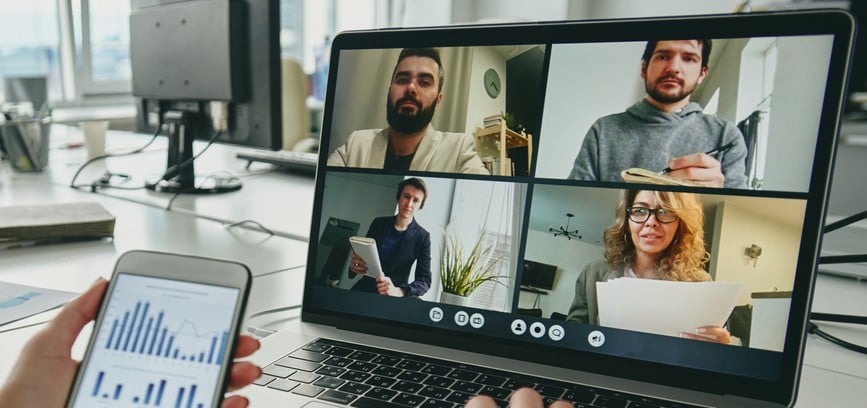
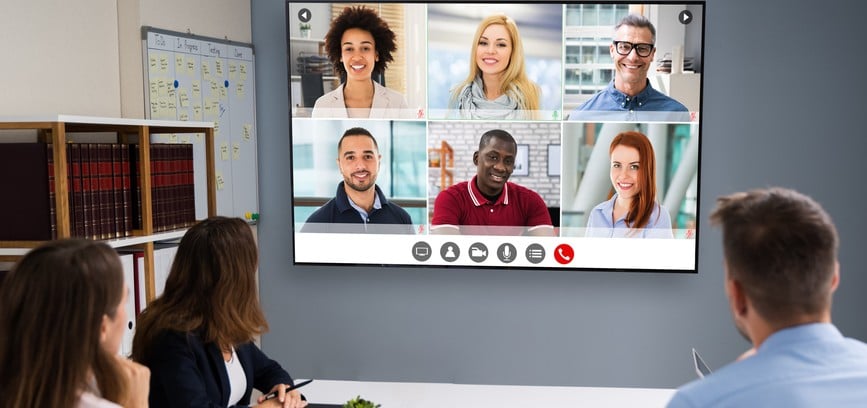
A meeting isn’t just a meeting anymore. In a hybrid working climate where people are working from home as well as in the office, you can’t simply just book a meeting room OR send out an invite to a Zoom call. Nor is it as easy to moderate participation and make sure everyone feels included.

So how do you host and facilitate a successful hybrid meeting?

To answer this question and more, we spoke with Trevor Ambrose, a sales training coach helping businesses and individuals in Australia and internationally to improve their speaking and presenting skills. Trevor will share the best practices for both facilitators and participants in running engaging, inclusive and productive hybrid meetings. We also touch on some practical tips to ensure your physical workplace can effectively support meetings in the new hybrid working environment.

From fully remote to hybrid

When the rapid uptake of working remotely began, there was uncertainty on how to proceed. According to Trevor, many were ‘technically challenged’ and had to learn and adjust to the new ways of working. “They didn’t know how to switch on. People were still fumbling around not knowing if their mic was on or off, how to switch on their camera, and even how to set up an account for video conferencing platforms.”

After several months working from home, some employees were getting ‘Zoomed out’ and overwhelmed by the constant virtual meetings. It became evident working full-time remotely is not going to be right for everyone or every role or business.

The need to bond and have physical connection with friends and colleagues signals that hybrid working will be the norm moving forward for most workplaces. “Even post COVID, it’s never going to go back to how it was where we would always do the physical face to face sort of meetings, but we’ll probably be doing a bit of both.”

Hybrid meeting best practices for the facilitator

With the higher risk of miscommunication and employee exclusion, managing hybrid meetings becomes more challenging than when everyone is physically present in the same room or all coming in virtually. Great facilitation is needed. One person, whether a team member or another participant, should be assigned to host or facilitate the hybrid meeting. Here are some best practice tips for the facilitator to help guide the meeting and keep things on track:

Plan an ice breaker or pre-meeting chat

Mandy Holloway, Courageous Leadership Facilitator, says that one way to get everyone comfortable at the start of a hybrid meeting is to have an ice breaker or a pre-meeting chat. This will get people settled and test their audio and video connections. More importantly, ice breakers can help remote participants feel included from the very beginning. You can start the meeting with some informal chats about the weekend or about a recent event. A short poll or quiz can also help start things off. But make sure your ice breaker is quick and doesn’t eat up the time for the official meeting.

Use people’s names

Like in a face to face meeting, it’s important to know every participant by name. In a hybrid meeting, it’s even more essential to know the names of participants coming in remotely. Trevor mentioned he writes down the names of remote attendees on a whiteboard. “So when I talk to people in the room, I always make sure to say ‘hi’ and ask them ‘what’s your take on this?’ And I would constantly bring them into the conversation so that they don’t feel excluded.” 

It’s easy for in-person participants to dominate meeting discussions. Knowing people’s names helps the facilitator to draw remote attendees in, keep them engaged, and ensure they have equal participation in every conversation.

Be interactive

Trevor highlighted the importance of making the hybrid meeting very interactive. If not, participants, especially the ones dialling in, will tune out and focus on other things in front of them. “As a facilitator, if I notice you doing something else or getting disinterested, I will begin to ask you direct questions to bring you back in. I will fish you back into that meeting, so that people will see I’m alert.”

You can also use some interactive tools like polls, Q&A or virtual whiteboards to keep participants engaged and focused. Facilitators can ask questions and have attendees answer through the chat box function within the virtual meeting platform.

Make the invite clear and stay on schedule

As a facilitator, it’s important to schedule the meeting properly for every participant. Make sure to send the invitation days ahead of time with the meeting room details for in-person attendees and the correct link to those joining virtually.

“Outline the purpose of the meeting and send a detailed agenda in advance. This can help especially when there’s more people attending. If there’s no clear direction in the meeting, it just fumbles around, and people get bored,” says Trevor.

Be prepared

This sounds obvious, but as a facilitator, you need to be prepared. You have to spend some time planning the meeting. Especially in a hybrid setting, you need to carefully plan an agenda and how to achieve the objectives of the meeting. It may also be worth readying some questions or discussion points to get conversations going. If you are doing some interactive activities, make sure remote participants can join in and have equal participation.

Before starting the meeting, be prepared with some guidelines and rules to guide participants. Set the rules about asking and answering questions, muting and unmuting, and who’s presenting and when. As a facilitator, you also need to be comfortable with the controls when sharing your screen, recording the session, and other technical aspects of the meeting platform.

Get your set up right

Nothing is more frustrating in a hybrid or virtual meeting than losing your audio or video in the middle of an important discussion. As a facilitator, take the time to test the audio-visual set-up for both the in-person and remote attendees. It might be worth doing a dry run to make sure connections are running smoothly, especially before a big and important meeting.

If you have a speaker or presenter, it’s essential to test their camera and microphone to make sure everyone, including remote participants, are able to see and hear them clearly. It’s also important to have the presenter position themselves properly – by having the camera at a good angle, centring themselves, and ensuring there are no distractions in the background. Trevor says, “I make sure that I’m positioned in a way that everybody can see me and I can see those people dialling in as well on a big screen. And that they can talk to me.”

Best practices for hybrid meeting participants

Hosting a successful meeting is not just dependent on the facilitator. The participants, whether attending in person or remotely, need to do their part.

Dress the part

“People need to step up more in professional meetings. Some people just look weary and tired with their body language, their posture and their attire. They need to realise that when they attend a meeting, even virtually, they are representing the brand of their company.”

Trevor encourages people to present and speak professionally, to look professional, and to have a professional demeanour when meeting with team members and clients.

Organisational leaders also need to set the expectations. They have to set policies for virtual meetings, communicate those policies, and even train employees how to look and sound professional. “I think companies should have a strong protocol. When you jump online, what is your dress code? If we’re going to do that in person, we might as well just do it virtually as well.”

Turn on your camera and get comfortable

Trevor noticed that some participants have been turning off their cameras during meetings. “This creates a barrier between people when you run hybrid meetings and presenting skills. You can’t see people’s reactions.”

Turning on your camera is essential in virtual or hybrid meetings. Seeing people’s faces, even virtually, establishes connection and trust. Similar to in-person meetings, it helps to see body language and understand when participants are engaged and focused or just getting bored and distracted.

Stay engaged

“I think the biggest problem is silent attendees. People are just sitting there and they just attend but they’re not engaged. They’re not actively talking.”

As a participant, you need to be involved in the meeting and ‘stay in the moment.’ Be engaged and don’t be afraid to speak up. Also, try to avoid in person cross-talks and impromptu side conversations as they can be distracting and confusing for remote attendees.

How your physical workplace can support hybrid meetings

Hybrid combines the physical and virtual environments. This means your physical workspace plays an important role in enabling and supporting hybrid meetings. Here are some things to consider when planning your workplace in a hybrid working environment.

Collaborative spaces for digital inclusivity

In a hybrid working environment, remote workers want to feel connected and that they are part of the team. It’s essential to design the physical workplace to have open collaborative spaces where both onsite and remote workers can work together as if they are sitting next to each other in the office. These collaborative spaces need to enable seamless connection to digital tools and virtual meeting platforms.

Axiom recently worked with Cisco Meraki to design and build workspaces that bring people together, which included a coffee bar area and tiered seating purpose-built for the monthly dial-in with San Francisco. These workspaces can also be used by onsite staff to meet and collaborate with remote colleagues, thereby enhancing workplace culture and community, even in a hybrid environment.

The right AV technology

Trevor cannot stress enough the importance of having the right technology to enable successful hybrid meetings. For best virtual connections in meeting rooms, make sure to invest in video conferencing and audio equipment. This includes quality web cameras, TV screens, microphones, speakers and soundbars. Also invest in digital tools that facilitate wireless content sharing, collaboration and communication. Make sure the tools and technology allow seamless integration so “people can just walk in, plugin, and boom, it’s on-screen.”

Lastly, it’s important to train everyone on the meeting technology. Help employees to get comfortable and familiarise themselves with all the technology in place – from logging onto the platform to switching screens and sharing content.

Acoustics

Aside from the AV technology, acoustics is also an important consideration when it comes to hybrid meetings. Poor meeting room acoustics can let external noise and other distractions come in – making it difficult for participants to concentrate and be productive. So, make sure to test noise levels in meeting rooms and invest in better sound insulation.

In addition, hard surfaces like glass walls, whiteboards and large screens can have a negative impact on room acoustics. One way to solve this problem is to add sound-absorbing material to the walls. This prevents noise from bouncing around the room and creating echoes that make speech and conversations difficult to understand.

If you want to learn more about hosting successful hybrid meetings, get in touch with Trevor Ambrose.

You can also read our guide to the future of work, and understand how to adapt to the fundamental changes occurring across workplaces in Australia.

Digital Inclusion in Hybrid Workplaces

How to support digital inclusion in hybrid workplaces

The hybrid workplace model is the new norm in most workplaces, with employees dividing their time between the office and working remotely. Although this provides freedom and flexibility for staff, it is creating a challenge for employers in making sure everyone is productive, engaged, and feels part of an inclusive culture.

So, let’s talk about digital inclusion – what it is, why it’s important, and how you can ensure your future workplace strategy supports it.

What is digital inclusion in the workplace?

Each employee, whether they are working at a physical office or remotely, wants to feel part of the team, and be able to collaborate and work together with colleagues, as if they are just sitting side by side on their workstations or in a conference room.

Digital inclusion focuses on providing the same culture, conditions and opportunities to every staff member, no matter where they are working from. It means leveling the playing field for everyone, and delivering equal access to technology, resources and information required to do their jobs efficiently and effectively. 

Digital inclusion therefore becomes critical in a hybrid working environment, where you can have a physically dispersed workforce. It enables employees to feel connected, engaged and empowered to do their best work, wherever they are.

Barriers to digital inclusion

Achieving an inclusive culture is difficult enough when people are all working in the same office, but now there’s that added complexity of working with hybrid teams. Here are some of the challenges that would limit digital inclusion in the workplace:

Technology

Technology can be a great enabler for digital workplaces, but it can also be a barrier to digital inclusion. With people working from different locations, they don’t all have the same internet speeds and wifi capabilities. So, for remote staff, connecting to virtual meetings or conference calls may not be guaranteed or seamless. Also, not having collaboration tools like Microsoft 365 or Google Workspace can create numerous issues that can impact productivity and collaboration between remote and onsite teams. 

Culture based on old habits and practices

Digital inclusion won’t work without the cooperation of every staff member. Some people can have the tendency to go back to old habits and practices. They can resist the change to a digital workplace, and prefer to work in a face-to-face environment, leaving out those who are working remotely. 

Lack of visibility and connection 

Another barrier to digital inclusion is the lack of visibility and connection with remote employees. Business leaders can easily connect with people they physically see in the office and be able to understand their needs and preferences. But it becomes difficult to maintain the same level of service and connection when dealing with remote workers, where there is no physical visibility.

Lack of communication

Equal access to company information is essential in achieving digital inclusion. However, this is not easily achieved. According to Igloo’s 2020 State of the Digital Workplace, nearly 60% of remote workers feel they missed out on important information because it was communicated in person.

Fostering digital inclusion in your workplace

Building an inclusive workplace can work wonders in improving employee engagement and productivity. Here are some ways your workplace can foster digital inclusion:

Conduct a quick audit. To implement any change in the workplace, it’s important to step back and understand the current situation. Observe staff interactions (both onsite and remote) and do interviews and surveys. How do people feel about working in hybrid teams? How much collaboration is happening? Do remote workers feel disconnected?

Create an inclusive culture. Integrate inclusivity in your core company values and then communicate those values effectively to the different teams. It’s also important that the push for digital inclusion starts from the top – so encourage leaders and managers to treat and manage everyone in the same way, no matter if they’re working in the office or remotely. 

Implement inclusive communications. This means all company information should be communicated effectively to all employees, both onsite and remote. And make sure you communicate in different ways, including email, chat and other internal communication channels. 

Have the right technology. It’s essential to implement technology that can work anywhere. This enables staff to do their best work wherever they are – including equal access to the right collaboration and productivity tools. 

Make sure everyone has a voice. Remote workers tend to feel isolated. They sometimes feel unable to participate and be heard. Especially in meetings, encourage everyone to participate and contribute. Ensure each participant has an opportunity to speak out and be respected for their ideas.

How your physical workspace can support digital inclusion

Although the hybrid environment deals with both remote and onsite teams, your physical workplace still plays an important role in supporting digital inclusion. 

Create meeting rooms designed for equal participation

Equal participation in a face-to-face meeting is challenging enough – but it becomes even more difficult when you have other people joining through a virtual environment. This requires more than installing a webcam, monitor and speakers in a meeting room. The furniture selection & orientation, in conjunction with appropriate lighting & acoustics, are vitally important to ensure digital inclusion is fostered. There needs to be a meeting moderator and a process in place to ensure that all participants are treated equally and have the same opportunities to speak out and be heard.

According to a senior workplace strategist at Axiom Workplaces, “You need to have great speakers and microphones. I think you need to have a moderator or a facilitator that can control the conversation in a way that the technology can keep up with what’s happening in the room and make it easy for someone who’s joining in remotely, to follow what’s going on.” 

Implement seamless room booking technology

Aside from providing equal participation, meetings in a hybrid workplace should be able to allow seamless connectivity and transition between virtual and physical environments. 

There is a strong need for an ‘intuitive connection’. People don’t want to spend too much time trying to book a meeting room then struggle to use the technology within the room – which is the usual situation in most organisations. “Breaking down the restraints between the physical space and technology is important. You need to provide dual screens, so that everyone who’s joining in remotely is on screen, despite the fact that you might be sharing information on another screen.” 

Deploy a desk booking system

A desk booking system allows employees to book or reserve desk space before they get to the office, through a web browser or mobile app. The system helps you manage the physical office with data and reports for workspace utilisation and planning.

Build collaborative spaces

To build a positive and inclusive culture, it’s important to build collaborative spaces where people can come together when they do come to the office. This will allow workers to build stronger connections with colleagues and make them feel less isolated when working from home.  

Axiom recently worked with Cisco Meraki to build a workplace that created a strong sense of culture and community within the organisation. The Axiom team designed workspaces that bring people together, including a coffee bar area and tiered seating purpose-built for the monthly dial-in with San Francisco. 

To learn more about building a strong and inclusive culture in a hybrid working environment, check out our interview with Cisco on creating a digitally inclusive workplace.

If you would like to learn how to undertake a Digital Transformation of your workplace click below:

Want to learn more about Digital Transformation and the Role of Workplace Strategy? DOWNLOAD EBOOK


How to build resilient teams in an ever-changing business environment

How to build resilient teams in an ever-changing business environment

We see the current climate in Australia as ‘yoyoing’ between working in the office and remotely, all dependent on something largely out of our control. So how can businesses build the necessary resilience to overcome these challenges and come out the other side stronger and more successful?

To answer these questions and more, we spoke with resilience expert, Heidi Dening. Heidi shared some valuable insights on workplace resilience – what it is and why it is important in the current working conditions. She also provided practical strategies on how to build resilient teams and explored what to focus on when designing the office to support workplace resilience.

Resilience has often been defined by the ability to bounce back…but is it?

“I believe resilience is really defined by somebody or a place’s ability to bounce forward, to be able to learn something from the challenge that we have gone through, be able to adapt it to what the new norm is going to be for that workplace, and be able to progress forward, to move forward, to bounce forward.”

– Heidi Denning.

Workplace resilience is often defined as the ability to bounce back from setbacks and handle difficult experiences or events. For the past 18 months, many organisations have been focused on resilience and in building resilient workplaces. They want to navigate through the challenges and changes brought about by the pandemic – until things go back to ‘normal’. If they can survive and bounce back, then the business would be considered a resilient business.

However, Heidi has a different view on resilience. She doesn’t believe we should “measure a person or a workplace by their ability to bounce back.” We all go through fundamental changes when experiencing challenges or adversities in life and at work. Even at a cellular level, we don’t really go back to the way things were. 

We have to adapt to the changes and keep moving forward – to learn from what we, our customers, employees and partners are going through; and not crave that stability and safety we felt before the pandemic began. 

The ‘yoyo’ working environment in Australia

With all the lockdowns over the past 18 months, the climate in Australian workplaces can be described as ‘yoyoing’ from between working in the office and remotely. How is this affecting workers? 

“It’s chipping away at them. Without a doubt,” says Heidi. The current ‘yoyo’ climate is forcing people to adapt to the new normal – working at the office when allowed to do so, and going back to remote working when lockdowns happen. To survive and still get things done, most employees need to change their lifestyles and implement new working habits. The bottom line, everyone is feeling overwhelmed, stressed and exhausted. This makes resilience in the workplace more important than ever in the current yoyo environment.

Why workplace resilience is important

Heidi highlighted that resilience in the workplace allows for creativity and innovation. The future is definitely unpredictable and unknown – but resilience enables you to move forward and think outside the box. It empowers you to do something new, different and unique. 

Resilient teams adapt quicker to the new ways of working, and figure out ways to be more collaborative and productive in a virtual environment. And when leaders build resilient workplaces, it’s a lot easier for them to create new business models, adopt new technologies, and develop new and innovative ways to deal with customers. All these help the business not only survive, but thrive in this uncertain and ever-changing world.

“When you have developed your resilience muscle, you’re actually developing your creativity and innovation muscle. I think this is the greatest benefit for a workplace.”

Building a ‘culture of care’ to help teams be more resilient

Now that we know how important resilience is in this current climate, how can leaders deliver a positive support experience for employees working remotely? Heidi has provided us with a number of ways employers can create a ‘culture of care’ to help teams be more resilient.

Be vulnerable and authentic

As a leader, you always want to appear strong, happy and confident. And sometimes, you need to be but during these uncertain and challenging times, your team also wants to see the ‘human’ side of you. Be vulnerable and authentic enough to admit that working from home is not always easy – that homeschooling and being locked in with your partner is sometimes difficult and can drive you nuts. This way, your team can feel that they’re not alone when they feel stressed and overwhelmed. So others feel okay to say, “I’m not okay.”

Bring a sense of calmness

Yes, you can be vulnerable and say you’re not at your peak at certain moments, but as a leader, you also need to show the team that you are calm and in control. Heidi stressed that “bringing that sense of calm in a world that’s feeling very unsettled is definitely important.”

Deliver relevant and accurate information

In times of crisis, most employees are inundated by news that they get from the media and from friends, families and even colleagues.  However, this information can be inaccurate or totally untrue. Leaders need to be able to disseminate information that is relevant and accurate. They have to figure out what’s real and what’s not – and deliver that information to the team in a timely way. 

Be a visionary

Your team will look to you for assurance and guidance. They will depend on you to create a path through this crisis. As a leader, you need to be a visionary – not in such a way that you can predict the future – but in a way that assures the team “we have what it takes to adapt and we’re going to be okay in this new world.”

Stay connected with your team

Heidi highlighted the need for leaders to “know what to look for, to make sure the team’s doing okay, virtually.” You have to know how people are going. So, make sure you stay connected with your team, through messaging, text or phone. If you would like to learn more about whether your team are resilient enough to cope with all the stress and uncertainty, take this short quiz.

How the office can support resilience

The long-term view is that most workplaces will have a hybrid working environment, where employees divide their time between the office and working remotely. So, the physical workplace may look different in the future, but would still play an important role in building resilient teams.

According to Heidi, there are a number of factors that impact resilience in the office:

Lighting

Light decisions in the workplace can make a huge difference in a person’s ability to sleep well. And sleeping well helps employees to be more productive and perform better during the day. Of course the opposite is also true, and a person will feel tired, exhausted and unable to perform his/her best, if he/she gets even just one bad night’s rest. 

Noise

“Sound is another one, because distraction at work is something that really chips away at our ability to work well.” Heidi noted that when people get distracted, whether it’s because of the sounds around the office or colleagues talking, it can really stress them out. Some are good at zoning out by wearing headphones or simply focusing intently on their work. But the majority of people struggle with sound distractions.

Technology

Technology has a big impact on resilience in the workplace. Whether employees are working at the office or at home, they need the right tools and technology to be able to do their jobs properly. Having the wrong type of tech or if things just don’t work, this can be a source of frustration and stress. “If you’re ambitious, and you want to get things done in a particular time without mistakes, then you need the tech to do that. And if you can’t, again, it’s just chipping away at someone’s ability to work.”

Social spaces

When designing your office, it’s important to create spaces that build connections between people. “Social health is so crucial for a team’s culture.” Heidi mentioned that employees go to the office to connect and collaborate with colleagues – to have a laugh and share life stories. “For many people who live by themselves or in really bad relationships, or, you know, lots of things going on in the background, the workplace can be such a sanctuary.” So, the office needs to be designed in a way that it allows social connection between teams and employees.

Axiom recently worked with ELMO, one of the fastest-growing HR tech companies in the Asia-Pacific region, to build a workspace that would foster connection and community engagement. The office design included a café and community space where staff can relax and socialise, and a wellness room where they can practise yoga and meditation.

If you’d like to learn more on how to better prepare your business and workplace for the future of work, read our Progressive Leader’s Guide to the Future of Work in Australia.

Interview: Building a sustainable workplace with ESG

Interview: Building a sustainable workplace with ESG

A strong ESG (environmental, social and governance) proposition can create substantial commercial value for your business, including attracting both investors and top talent, plus boosting financial performance. So how can you leverage your workplace strategy to support ESG?

Can you define what ESG really means?

“ESG can sound complicated, but it really isn’t. It’s essentially a reframing of what we mean by sustainability” – Jack Noonan.

Jack Noonan, VP at the International WELL Building Institute, recently spoke to us to delve into what ESG really is, the benefits of a strong ESG position, and how your workplace strategy fits in.

At a top level, Environmental, Social and Governance (ESG) is a framework for assessing the impact of a company’s sustainability and ethical practices – in the past it has been associated with investors assessing business value.

However, Jack says this is an important framework for us all to use when thinking about sustainable practices: “We need to think about things that are good for the planet, things that are good for people and things that are done in the right way.”

“As someone who’s been a passionate sustainability advocate for over a decade, it’s been difficult to see that sustainability is often associated with this concept of doing ‘less bad’ or harm minimisation – it is often associated with needing to give something up. Because of this, it doesn’t always resonate with the broader community.”

“What ESG does is reframe sustainability as a concept in a more positive, holistic and standardised way so that people can understand what ‘good’ actually looks like.”

Investors and ESG

For investors, the ESG framework is about including non-financial indicators to investment decisions to help better inform potential risk and return.

Jack explained that previously, 70% of the information used to create valuations was financial, and about 30% was non-financial or somewhat intangible (Jessica Cheam, Founder and MD of Eco Business and ESG Committee Member for the Singapore Institute of Directors). That’s now flipped, so about 30% is financial, and about 70% is non-financial, intangible types of indicators like ESG. One of the key drivers of this trend is evidence that employers who focus on health and wellbeing have employees who are more engaged, productive and resilient. This typically results in better financial outcomes over the long term.

So while ESG used to be very niche, according to Bloomberg Intelligence, globally ESG assets may hit $53 trillion by 2025. However, in the early days of ESG frameworks and data, Jack says it is challenging to demonstrate higher social sustainability performance in particular.

“I think for a long time we’ve been able to say what good environmental sustainability looks like, we’ve been able to show what good governance looks like, but social sustainability has been to some degree a bit of a black box,” he explains.

Now it’s a different story: “Due to recent efforts in healthy buildings, corporate social responsibility and the acknowledgement of the positive impacts on human health and wellbeing, as well as broader societal impacts, social sustainability has become more prevalent within global sustainability benchmarking platforms and other frameworks.”

What are the benefits of a strong ESG proposition?

Attract and retain talent with a strong ESG proposition

There is an increasing expectation from employees that their organisation contributes to broader sustainable outcomes and a more environmentally conscious future. Additionally, there is an expectation that the organisation is demonstrating good governance and that the organisation cares about the health and wellbeing of employees.

Jack explains that “up to 76% of employees said they struggle with their health and wellbeing and that stress was a key factor in this, and that was before the global pandemic.”

Employees are increasingly looking to employers to support their health and wellbeing and that of the wider community: “If we spend so many of our waking hours at work, it makes sense to expect our organisations to have our health and wellbeing in mind. And I think another important aspect to this is that we have people increasingly demanding that organisations have the broader community and the health and wellbeing of the planet in mind as well,” Jack reveals.

Attract investors

In recent years there has been a solid focus from the investor community on ESG. Jack cites KPMG, who found that 86% of Australians expect their investments to be responsible and rooted in ethics, with another majority aiming to shift their investments into ethical companies in the near future.

“And they’re not just doing this because it’s the right thing to do; They’re investing because it has better returns,” explains Jack.

“This might sound like something quite obvious, but an organisation that values and supports the health and wellbeing of their employees is an organisation that has employees that are more engaged, productive and resilient, and this results in better financial outcomes for the organisation itself. This is why investors are looking at ESG performance because it just makes financial sense.”

ESG is good for the bottom line

Fundamentally, a strong ESG position has a material benefit to an organisation. Jack told us that “organisations are more likely to have better financial outcomes as a result of strong ESG performance.”

Illustrating this point, Jack explained that Dr Lawrence Loh at the National University of Singapore has found that more robust ESG performance leads to better market value and better brand value.

How can your workplace strategy support your ESG proposition? 

Jack says this is a question that many organisations are thinking about right now, particularly as we begin considering the post-pandemic future, where some of these more intangible aspects of organisational strategy have come to the fore.

“Ultimately, workplaces need to become people-first places, and they need to be focused on providing a positive and inclusive experience for all people, and one that supports all aspects of their health and wellbeing as well,” Jack explains.

What does this look like in practice? Jack says that workplace strategies should include provision for mental health programming, more robust community programmes as well as exceptional indoor environments: “That is, an environment with great air quality, lighting, acoustics, thermal comfort, and that encourages hydration, healthy nourishment and movement through the day.”

“These are all fundamental for organisations to provide a workplace that can support and demonstrate a strong ESG position,” Jack concludes.

Additionally, indoor environments which enable connection and efficiency whilst removing barriers and frustrations will serve to improve productivity and also better your bottom line.

Would you like to learn more about what the future workplace looks like? Explore the progressive leader’s guide to the future of work in Australia to find out more.

Utilising data to drive workplace change

Utilising data to drive workplace change

Accurate and meaningful data is critical to making informed decisions about your workplace. Now, with the trend towards flexible working, the ability to understand how your space is being used and to accurately forecast future workplace requirements is essential for efficient workplace management. 

It is also important to note that as there has been such a rapid change in the way people work, towards a ‘work from anywhere’ movement, organisational leaders are looking for strong evidence that helps them identify what their workplace should look like in the future, and what will drive employees to come back to the office and re-engage with the vision of the business.

Some of the region’s most strategic minds in workplace strategy came together for our webinar to demonstrate how data can be utilised to drive workplace change. Panelists included: 

  • Lisa Copland, Head of Workplace Strategy and Change at Presynct 
  • Jo-Anne Mann, GM and SVP Sales, Asia Pacific at SpaceIQ
  • Peter Black, Workplace Strategist at Axiom Workplaces 
  • Steve Elliott, Head of Property and Facilities at QBE Insurance 

Let’s go deeper into the discussion here, to understand how we can effectively gather and analyse workplace data, and use such insights to make better workplace decisions.

How COVID-19 changed the landscape

Working flexibly and remotely had already been present in many workplaces, prior to COVID-19, it had not really been culturally accepted. 

Changes were slowly happening, but it was accelerated as a result of last year. Flexible working became accepted and swiftly normalised. The stigma attached to it seemed to have disappeared overnight. Now tested and proven successful, the evidence that work still happened away from the office means employers need to be open to people working at home or remotely. Where companies once offered it but didn’t really support the cultural shift towards it, employees now expect flexible working as a permanent part of their employment. “No one cares about their desk anymore – they want flexible working instead,” says Lisa.

In fact, an in-webinar poll queried expectations for the average days in the office per week in the immediate future. Nearly 50% responded they expect 3-4 days in the office, and about 40% want only 1-2 days working on site. This clearly shows that flexible working is a majority preference, and that the future workplace will most likely remain a productive hybrid of working from home and at the office. Employers who don’t offer a flexible work practice risk losing a talent pool of great employees to other organisations who do, and will find it harder to attract great talent.

How organisations are gathering and analysing data

Steve Elliott shared how his organisation gathered data through utilisation studies. “We did it 6 weeks before COVID. What we lack now is data that is live and dynamic”.  The company recently invested in a tool that allows them to gather data through the employee check-in process.  Steve mentioned that this will provide them with daily data on the utilisation of the space and desks within the working environment.

Half of the webinar attendees seem to gather data in the same way. A second live poll demonstrated that around 50% of represented organisations measured the utilisation of space in the workplace (including desk and meeting room usage). 

Peter Black identified the challenges for organisations today confirming it was tough gathering data during lockdowns. “We struggled with it because COVID is a big gap – a year at home means you don’t have data.” You have to look at historical data to base future projections on. So, while the environment was completely different, pre-pandemic data is still useful in determining the kinds of spaces employees occupy at different times of the day and week.  

What decisions are being driven by data?  

Right now, most workplace decisions rely on understanding people’s behaviour as they divide their time between working at home and in the office. By engaging in a workplace strategy piece where employees and leaders are asked what they require in order to complete their tasks, and simply observing employee actions – management can have a better view of what people do when they work in the office. 

Currently, we are seeing a trend where employees use the physical workplace to connect and collaborate, then they work from home to engage in more focused tasks. This collaboration with employees enables leaders to identify which activities and projects are better done in the office or at home.

Steve also noted that “managers want to know when teams are coming in.” So, it’s important to get the data from people’s schedules to understand when they’re coming into the office or working remotely. Some employees book their schedules 2 weeks in advance. This data helps managers plan out support and other resources needed for each day. But as Jo-Anne pointed out, the information is not always accurate since “many people check-in, but don’t come in on the day.” 

Another decision that’s driven by data is the actual space and number of desks needed for each day. This is where the utilisation data of desks and space comes into play. Of course, there will always be ‘peak days and peak floors’. People move desks and use different work spaces on the same day. And this can skew the utilisation figures. So can user error: ‘How many people check-in, but don’t come in?’, asks Jo-Anne Mann. 

Both employers and employees are still adjusting to the new ways of working. So it can sometimes be difficult to get accurate data. Steve added that “We’re making decisions in the heat of a pandemic that won’t be here forever.” It’s essential to view the information from a bigger, more practical perspective.

What decisions SHOULD be driven by data?

We’ve seen how data is being used to plan daily activities and help make decisions on the amount of space or number desks needed each day. But the real value of data – where it can have a bigger and more profound impact on the organisation – can be seen when making future workplace decisions, and projecting into the future a working model for the organisation that can withstand changes in circumstances and variations in workflows.

How much change can we bring into the workplace? What headcount and how much growth can the current office space accommodate? To answer these questions, you need to look at the current and historical workplace data plus industry and market conditions. Plus, you need to explore and test out different scenarios. 

Peter highlighted that organisations now have the “intention to grow without growing.” That is to grow revenue and profitability across the business but not growing in staff numbers. To do this, you need to look at automating and streamlining processes, plus outsourcing routine tasks. Many companies tend to overestimate the amount of office space they need. “It’s a better story to expand,” says Peter. “It’s easier to outgrow a smaller space then expand, than to have too much space to begin with.” 

Companies are also able to add more spaces to innovate and socialise than before because when the data confirms they don’t need a desk for every employee, there is opportunity to introduce more variety of working environments within the same amount of space. This is something that may have been prohibited previously by budget and real estate costs.

In making future workplace decisions, It’s important to start by understanding the problem. What are you trying to achieve? The next step is to find and gather the relevant data. Then analyse and gain the insights to make the necessary decisions. But it is worth noting that different organisations have different drivers when it comes to analysing information and making decisions.

How can you redefine a space to create excitement about the office?

As businesses look toward a post-pandemic future and reopen offices, the biggest issue they need to deal with is encouraging people back to a physical workplace. Most employees are comfortable working from home and are not rushing back in. Employers need to redefine the workspace, and find ways to create a magnetic appeal for people to return to the office.

This is a common issue for many businesses, according to Peter. The office can sometimes feel like a morgue because nobody is there. You need to look at opportunities to “curate the office space.” Events, group work and mentoring opportunities – all these can bring the energy back to the workplace. 

If there’s anything that people miss about the office, it’s the active vibe they feel when working with friends and colleagues. The experience cannot be like sitting on your desk on your own and just staring at your screen. You might as well work from home. Employees come to the workplace mainly to connect and collaborate. And a big empty space with rows of individual desks and people working in separate corners won’t help build that buzz or activity.

Steve suggested using data to determine the optimum size of the workspace you need for people to work together and create an energetic vibe – all, of course, within a COVID safe environment.

“Data, data, data. Clearly articulate with rich data. The rest will flow.” That is Steve’s last piece of advice. And it’s a statement that clearly highlights how your business can be better at making critical workplace decisions in the new world of work.

Want to learn more about futureproofing your workplace to ensure success and growth in the future? Read our guide to the future of work in Australia.

Interview with Cisco: Creating a digitally inclusive workplace

Interview with Cisco: Creating a digitally inclusive workplace

The workplace has changed forever and is continuing to evolve after the rapid transformation generated by the pandemic. Whether employees are working in the office or remotely, a successful workplace now needs to be a digitally inclusive workplace. But what does this actually mean, and what needs to be done? 

We posed these questions, and more, to John Corbett, Cisco Workplace and Real Estate Strategist. Our discussion uncovered how offices need to change for a new working world and revealed how Cisco is creating an immersive experience that levels the playing field for all employees – regardless of their location.

The challenges of the hybrid workplace

“We’re starting to notice that working from home has become the norm, and going into the office is ‘extraordinary’” says John.

He says that this in itself throws up some interesting observations. 

“Digital environments are frictionless – the transition between activities and engagement is smooth. By comparison, the office of old was rather clunky. The traditional office is architected to be fixed and time-bound and thus dynamically opposed to digital workflows. The office of now and into the future needs to catch up and we need to be smart at how we go about that.”

So if the traditional office is ‘hard’, how do we make the new workplace as ‘frictionless’ as the digital environment we’ve become accustomed to? 

John explains that this now means a reversal of what we saw 18 months ago, when we first got our stay at home orders. That is, looking at what we’re doing seamlessly and quickly online, and figuring out how we can replicate that speed and seamless efficiency in the office.  

“We’ve become very attracted to working in a dynamic digital-only environment. Meeting with ten people online is easy, but traditionally, at the office, it is complicated. So let’s make connecting the office, to the people in the office and the people outside the office, easy, on-demand and seamless.

“Let’s get the office to become an active contributor to our continuously evolving and transitioning workflow, rather than having to slow down workflow in response to the time bound, fixed nature of the office. 

“Why should we have to book a room to meet with someone? Do we book a laptop at home when we meet with someone? No. So the office should not be any different in our ability to seamlessly connect with other people or resources.”

This has been the focus at Cisco: seamless transitions and ensuring the built environment supports interaction in all its forms.

What does this look like in practice?  

“Say I want to have a video conversation with two of my colleagues. One is with me in the office and the other is remote. Traditionally, I would have to book a room to do that, and in doing, so I would roll around in Outlook, etc in order to do that. If we decided to have this meeting on-demand, I might hop into a room and then connect my laptop with a cable, or dial in and enter passwords, etc. What if I could just walk into the room, click the green button on my laptop to start my meeting like I usually would from home, and the equipment in the room automatically connected with me? What if it was fully automated, without touching a thing? 

“My environment should work for me, connecting to me, not me having to put all this effort into connecting to it. This is similar to you navigating across a digital workflow on your laptop. All the applications on your laptop know it’s you. You don’t have to tell them, and those software applications intuitively respond to your demands. The office workflow experience should be no different,”

Another challenge of the hybrid work environment is a lack of visibility. Whereas companies have a thorough understanding of their office’s physical space, they generally don’t have that same understanding of the workspace outside of that.

John says that “the physical office distributes a subliminal service that we take for granted. I.e. Your desk has an ergonomically assessed chair,  power, and competent network connectivity. 

“The distribution of this subliminal service needs to extend beyond the physical office. With 100 of your staff having to work remotely overnight, your office just went from one to 101 offices. If they were in the office you would have line of sight of the ability of the office and its infrastructure to serve your staff in order to help them get their work done. We need to be able to deliver the same level of service beyond the boundaries of a physical office and satisfy ourselves that our company is capable of intuitively servicing our employees’ workflow needs at a hardware and software level, at any time, anywhere.”

At Cisco, this means they are “levelling the playing field” by creating a digitally inclusive workplace

What is digital equality or inclusivity?

“It’s our responsibility to provide [our employees with] a first-class workplace experience whatever their location. And this creates a more inclusive environment,” John emphasises. 

John’s definition of digital equality has two primary components:

“One part is physical. You’ll often find pockets of competency in an office – so good tech in a boardroom, or large meeting rooms but nowhere else for example. It is inevitable that people will gravitate towards “better”, thus creating false economies resulting in uneven demand bottlenecks. A broader, more distributed delivery of seamless, consistent, and easy-to-use competency, in smaller sizes, increases supply elasticity and helps to balance out uneven consumption demand.

“The other part is equity beyond the physical environment. It used to be that if you couldn’t be in the office, you couldn’t work. And while we’ve seen this change during the pandemic, it’s still not good enough. We need to level the playing field further so that those who work from home aren’t viewed as passengers, but active members of the group. Why should a woman who has decided to start a family, be burdened with the uncomfortable choice of a potentially inferior place in the workplace, because she is not physically in the office?.

“For example, equitable equipment, such as the Webex’s background noise suppression AI, removes barriers to communication such as needing to mute and unmute yourself during a call. Therefore, the external environment now no longer impairs or disadvantages the external participant.”

How technology is levelling the playing field

We spoke with John about how technology is helping to overcome the challenges of the hybrid workplace and create a digitally inclusive environment for all employees. 

AI translation

“Instant translation tools are helping us manage differences that arise from cross-cultural connections and workplaces across geographies.”

Searchable meeting recordings

“I frequently work with people on the East Coast of the US who are having meetings at 2am my time. While we have a recording of that meeting, I don’t need to hear the whole thing, if I choose not to. I just need the snippets relevant to me. I can now search keywords and the technology takes me to each place within the meeting, where that topic was discussed… I can also see other areas of the meeting that were considered important to the meeting host, during that meeting. Additionally, I can also raise questions after the fact, too. This technology means, I can manage my time investments as I consider appropriate and I am not having to crumble my own work time boundaries to be an active participant in a global team while still remaining an active member.”

Smart tech used to diagnose connection issues

“Webex, Cisco’s collaboration platform, uses innovative technology to interrogate data and identify why you might be incurring an inferior meeting experience. It “sees” every bit of equipment (and related data) that is contributing to the engagement and can determine if, for example, it’s your headset that’s causing the problem, or something else.”

A look to the future 

What does John see on the horizon of the future of work?

Smart tech in the home office

“Smart devices, such as the Webex Video Endpoint, can continually collect intelligence to pick up on factors that create fatigue such as heat, air quality, or even environmental dangers like carbon monoxide for example.  All of a sudden, something as simple as a Webex video endpoint for the home could be used to help improve the environmental quality of a “workplace beyond the office”.  

Scaling digitally by leveraging the tech we already have

“We need to scale digitally. Technology needs to be distributable and singularly scalable across multiple platforms, devices and locations, including  the physical environment and “lean out” operational processes. We should be looking at how we architect this so we can leverage the technology we already have, and scale more on the “back end” rather than the front end, as an iPhone does for example.”

John concludes that you should “think of your office as one big device that connects people. Just because people are not there doesn’t mean they can’t be connected.”

Want to learn more about Digital Transformation and the Role of Workplace Strategy? DOWNLOAD EBOOK