Posts by Axiom Workplaces:

Five Ways to Bring Nature into the Office

Five Ways to Bring Nature into the Office

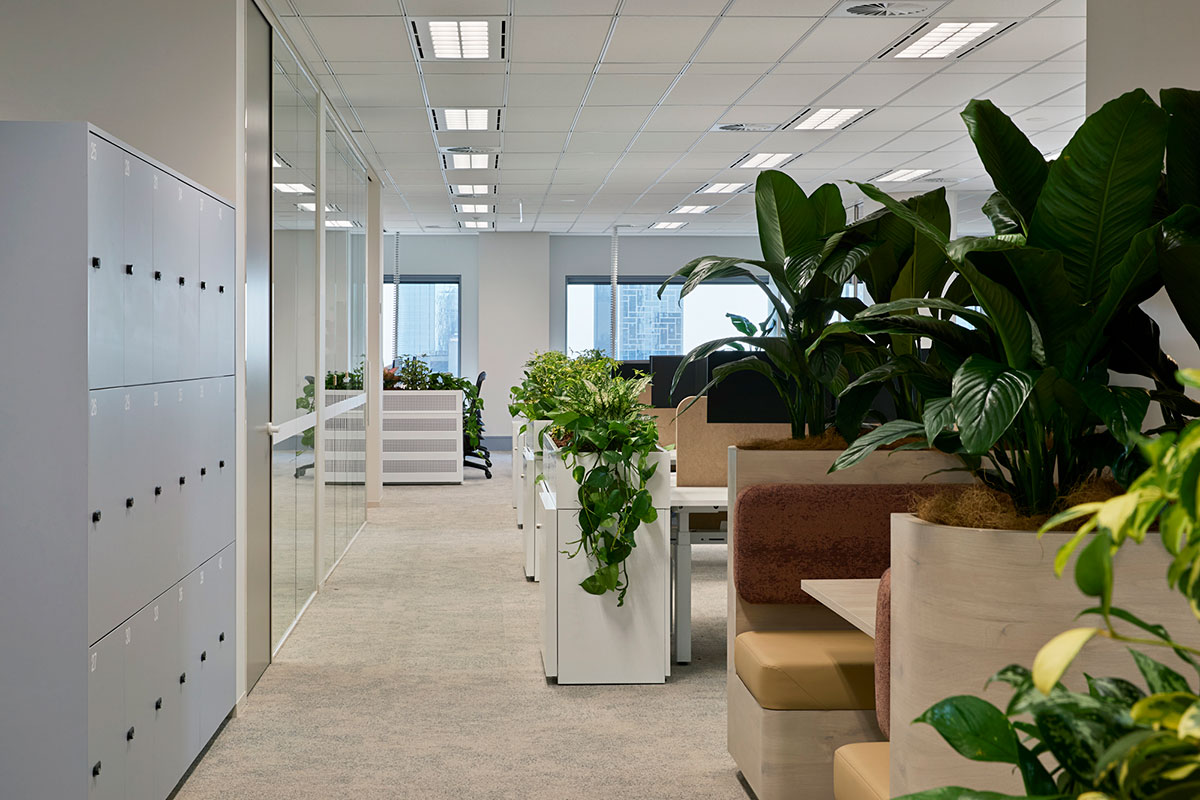
Offices that successfully incorporate the principles of biophilia into their workspace design are likely to create more productive and satisfying places for their employees compared to offices without natural plant-life. The beauty of this type of design is you don’t need to completely overhaul your present space to bring the natural world into yours.

How do you give your workplace a natural face-lift? We’ve provided you with some simple ways to introduce – or increase – the foliage in your office without smashing your budget to smithereens or taking you beyond a messy point-of-no-return.

Incorporate a living wall or vertical garden

As housing affordability issues increase, more people are turning to apartment living, especially in inner city areas. Along with this, the opportunities to cultivate traditional gardens diminish, yet the desire to create personal green spaces remains strong. One of the more innovative solutions for incorporating natural plant-life into our increasingly cramped private and workspaces is the vertical garden – or living walls, as some might call them.

The beauty of a vertical garden is it can be as big or as small as you desire. Possibly start with a relatively compact space and give yourself the scope to expand the size of this garden as it flourishes, and the productivity and employee satisfaction benefits start to materialise.

The maintenance of a living wall can also give your people the opportunity to take more ownership around the office, offering their input into the design of other creative vertical garden ideas around the workspace.

“The maintenance of a living wall can give your people the opportunity to take more ownership around the office.” Click To Tweet
Sustainability in Workplace | Design File: Hipages

Sustainability in Workplace | Design File: Hipages


“We should pay homage to our tradies.” 
Jodette Cleary, Chief People Officer, hipages

As Australia’s number one site for hiring tradies, hipages wanted to redesign their Sydney-based headquarters to make it feel like a second home to their staff. A typical corporate space, the office needed a homely readjustment to bring the aspects of home and work together and optimise employees to their fullest.

Before Axiom…

The original hipages office space was a traditional corporate space that lacked natural light and distinctly felt like a place away from home. With the goal of creating a sense of home, the hipages headquarters provided the perfect canvas for the Axiom Workplaces team to employ creativity and think beyond the usual design for corporate spaces.

Axiom’s Managing Director, Shane Hales, describes the undertaking as “applying creative thinking to not only align with our client’s commercial objectives but to create that unique environment of an unconventional workplace design.”

First impressions are important and, in keeping with this philosophy, Axiom wanted to create a memorable experience for hipages staff, clients and visitors when entering the main floor.

Axiom’s Senior Workplace Strategist explains the team’s approach: “We had to ‘de-corporatise’ the space to get that homely feel. The most important thing was in the selection of the details – things that you would see at home. All the little details came together to make up the full picture.”

“You don’t often see this attention to detail in corporate projects, and it’s usually a removed decision-making process. But not with this project.”

The structure of the building had potential, already standing head and shoulders above most corporate spaces in Sydney. It housed a balcony, with ability for a second one. But the existing balcony was a sorry sight, in desperate need of a makeover. This was a challenge relished by Axiom’s design team.

After Axiom…

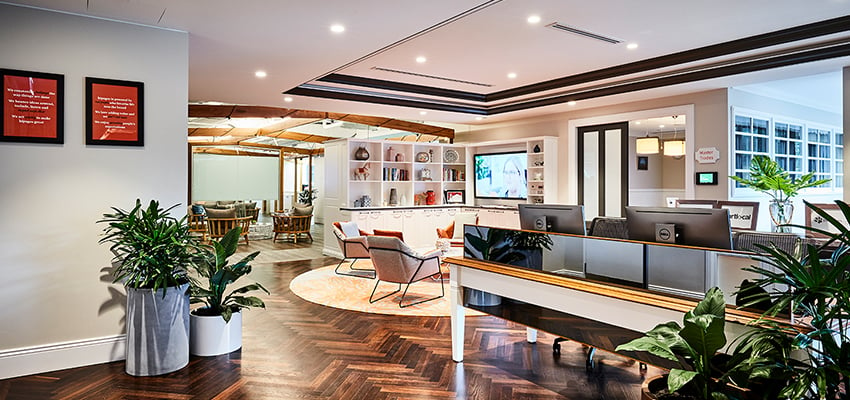
The team drew design inspiration from the exterior of a typical house – with brick cladding – but combined it with state-of-the-art technology. The lobby was stripped-back to project the hipages logo onto the floor, to signal innovation but also authenticity. The colours echo those in the hipages corporate palette. The entrance is a typical domestic front door, beginning the immersive experience and reinforcing the feeling of having arrived at home.

“Even the door framing was chosen for domesticity, rather than the typical aluminium framing, And the choice of carpet was soft and luxurious, the kind of carpet that makes you want to throw off your shoes and sink your toes into it.”

The real heart of the project and hipages home was the kitchen and adjacent ‘family’ rumpus room, together making it the team’s ‘town hall’. The area has multiple access points to avoid congestion, and an extended island bench ensures there is sufficient space for catering during hipages’ famous team functions.

Both of these casual time-out spaces are positioned away from general work areas to provide staff with the permission to truly relax, while not being concerned their actions and conversations may be distracting co-workers.

Axiom was inspired to create a piece of wall art with the hipages team as artists, something that is visually interesting but does not dominate the space. This artwork is also a sneaky method for concealing a base building services door, while having some abstract fun.

On hiding other unsightly and high-rise sights, “We hung curtains over the building services cupboard so instead of being greeted at reception with the firedoor and hydraulics, it’s all covered up with a floral curtain. That also helped to soften everything.”

To bring in natural light, Axiom took advantage of the balcony, terrace and deck area to provide a softer visual impact. It was decided to cover the side walls in murals that reflected the workstation screen colours, effectively melding the outside and inside to make it feel like one seamless space, and to extend the office outwards and provide an opportunity for staff to work in the fresh air – weather permitting.

Centralised recycling stations were installed alongside the hydration stations and printing facilities. Existing furniture and partitioning was all re-used where it was feasible to meet the requirements. Bringing fresh, green plants into the space is yet another homely touch that invigorates and provides health benefits for everyone.

When asked for the most satisfying element of the hipages project, the Axiom team says, “Reflecting the client’s personality. You walk in and it really feels like hipages home.”

At a glance…

    • Designed to visually reflect brand
    • Homely integration to a corporate space
    • Green elements to emphasise natural element
    • Sustainable practice
Workplace Wellbeing and Technology Trends

Workplace Wellbeing and Technology Trends

Workplace wellbeing used to stop at the water’s edge of smoke-free spaces, artificial plants and brightness diffusers that sat over your computer monitor. But, in today’s workplace, such things are just the tip of the iceberg. You’ll also find that technology is playing an increasing role in the kind of workplace design that facilitates staff wellness.

The CEO of Limeade, Henry Albrecht, is adamant that, in time, the amount invested in wellness and its outcomes will be measureable. What he means is companies will be able to see the impacts of workplace wellness on their bottom-line.

With greater measurability on the cost of investing in a healthy and happy workforce on the horizon, here are some ways that you and your organisation can you get ahead of the workplace wellness curve, with technology that both complements and seamlessly integrates into modern workplace design (when implemented correctly, of course).

Wellness portals

If the term is not something you’ve heard before, wellness portals are basically online hubs that serve as a one-stop destination for you and your staff to access health and wellness information (e.g. make a health insurance claim, book into a Yoga class or access other healthy lifestyle features). When integrated with the data collated from wearables (i.e. technology that can be worn close to the body to collect bio feedback), wellness portals can assist HR departments by tracking employee wellbeing on a global scale.

‘Connected’ workplaces are already a key feature of today’s office design and fitout concepts but, as the adoption of wellness portals and wearables ramps up, it is important your office workspace design incorporates the flexibility to adapt to changing technology. Make sure you keep front-of-mind the necessity to have IT infrastructure that can provide your employees with reliable and effective access to tools that will improve workplace wellbeing.

Breakout spaces

Breakout spaces are not a new concept in workplace design. What is new with these spaces, however, is their effectiveness in promoting workplace wellness. Where a breakout space may have merely once had a coffee machine and some unused office chairs near a window, the modern breakout space takes into account a wealth of aesthetic factors – like custom-made furnishings – alongside functionality considerations such as accessibility and effective use of light and sound.

While breakout spaces have traditionally been ‘tech-free’ zones, workplaces are now seeing technology as a positive contributor to relaxation and wellbeing – whether that means following a guided meditation from an app, playing a networked game or chilling out to some music. However, making sure your connectivity is seamless is the key to ensuring your workplace technology functions in this manner – there’s no better way to raise blood pressure than to have Wi-Fi signals dropping in and out!

When it comes to planning an office makeover, it is vital you have a crystal-clear understanding of the purpose of your breakout space. Will it be a room for quiet discussion? Will it be a refuge for employees who may be experiencing a stressful day to escape and breathe out for a moment or two? Will it be somewhere that your people can carry out work away from their desks?

Knowing what parameters you want to set around your breakout space – and, possibly, creating multiple breakout spaces for different purposes – will ensure the resources you dedicate will efficiently boost workplace wellbeing.

Ergonomics

A really simple example of effective ergonomics is the rise of standing – or height-adjustable – desks.

The health and productivity benefits of height-adjustable desks are widely agreed upon. However, the cost of overhauling each workstation with new furniture can be daunting for many office managers. Thankfully, manufacturers are creating sit-stand desk solutions that alter existing furniture to allow for this versatility, as well as the provision of completely new workstations. As the popularity of standing desks has increased so have the aesthetic considerations, meaning height-adjustable desks look right at home and play an important role in workplace wellbeing.

Consider introducing sit-stand solutions with one-touch electronic functionality that can accommodate hot-desking and be easily modified to the height specifications of different employees.

Workplace wellbeing is more than a buzz term - it can give back to your business if you consider it wisely. Click To Tweet And technology should be your friend in workplace wellbeing, so embrace it.

Learn more about creating spaces that promote wellness and wellbeing at work in our eBook: The fundamental of wellness and wellbeing in workplace design.

Axiom Workplaces combine your commercial fitout goals with our experience and expertise in evidence-based office design to create a thriving future workplace for you and your workforce.
Design File: New Axiom HQ

Workplace Transformation | Design File: New Axiom HQ

Finding potential in the impossible.

“Given the limited supply of space in the CBD of Sydney, tenants can’t afford to wait to secure their ideal office spaces so they are starting to create their own instead. Axiom is an example of those who have taken on the fitout themselves to create a workspace to their own standards.”

– Dean Bracken, Colliers International

As one of central Sydney’s older hi-rise buildings, but without any heritage appeal, 6 O’Connell Street was considered a B-grade space, offering tenants very little in terms of design and modernity. Yet, with unfettered views of Sydney’s iconic Harbour Bridge, the building’s location is one of the best in the world, which simply cannot be ignored.

Before Axiom…

The uninspiring interiors of 6 O’Connell Street did not deter Axiom. As a progressive workplace transformation company, the team saw this building as a blank slate that opened up a plethora of possibilities for creating a work environment in Axiom’s own vision – to walk the talk, as the saying goes.

Axiom was eager to use this move to showcase the company’s approach to workplace design. The fitout would act as a functional example of the more futuristic elements of office transformation that are now implementable and available internationally, as well as demonstrating to clients what can be realistically achieved, even within restrictions.

As Shane Hales, Managing Director of Axiom, admits, “Similar to our clients, moving office was a huge undertaking for us and we wanted to seize every opportunity that a move like this presented. This meant not only walking in the shoes of our clients and solving their problems via our own experiences but also putting into practice the kind of workplace transformation that we can proudly say is ours.”

After Axiom…

The three tenets of brand, wellness/wellbeing and the attraction/retention of staff are fundamental to today’s workplaces. Accordingly, the implementation of design features that honour these motivating tenets underpin every aspect of Axiom’s fitout at the new O’Connell Street headquarters.

The new Axiom brand was launched simultaneously as the new office, revealing a compass motif that visually and directionally reflects Axiom’s positioning as ‘change navigators’. Consequently, the updated office fitout physically emulates a compass in its structure and in the way that ‘people traffic’ flows around the floor. Circles feature prominently in the design – even the incorporation of a gong – with a Hub and Virtual Reality Display as the anchor in the centre of this compass.

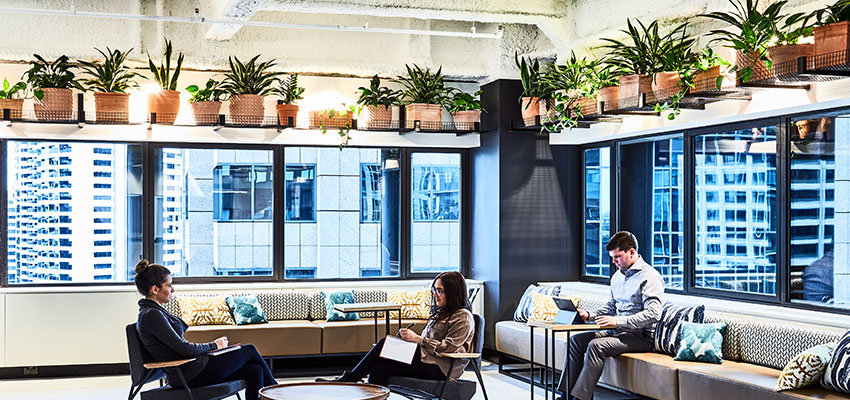
Other design embellishments include exposed ceilings, concrete treated flooring and terracotta plant boxes that frame entrances and windows and sit overhead, as a way of introducing a soothing aspect of green into the work environment without causing any obstruction.

The Hub is an enclosed workspace that offers seclusion and integrated technology solutions for collaboration but sits at the very centre of the Axiom ‘compass’. A touch screen desk allows for the placing of multiple ideas and can also send images to the screen on the wall for discussion. Glass set into the walls turns opaque at the flick of a switch to give occupants privacy from prying eyes and security to pursue brainstorming and idea-generation.

“We designed the Hub so it has two separate entries,” explains Shane Hales. “Occupants sit around a semi-circular table in bench-style seating, which we feel facilitates interaction. It is a very dynamic space. It’s really the perfect hub for closed-door collaboration sessions where everyone can feel comfortable in developing and discussing concepts, and really letting the creativity flow.”

Axiom uses the Virtual Reality (VR) and Augmented Reality (AR) Display as a planning tool so clients can see into spaces that have yet to be created before costly choices are made.

“Elements such as seating, furniture coverings, wall treatments, lighting and furniture arrangements can all be brought into sharp focus, as if they’ve already been completed,” continues Shane Hales. “This is especially useful for clients who have trouble visualising what we are explaining to them. It’s useful for both us and for them because it enables us all to be on the same page before moving ahead with anything.”

Far from being reserved exclusively for internal staff, the Axiom team is forthcoming in inviting clients and interested parties into their new space to experience the future of workspace design.

As Shane Hales concludes, “We’re very happy with what we’ve managed to achieve. And we cannot encourage others to follow our lead unless they experience it for themselves. So pay us a visit.”

At a glance…

  • Fit-for-purpose creative fitout of a B-grade space
  • Designed to visually reflect company brand
  • Technologically appointed central Hub for closed-door collaboration
  • VR/AR Display to enable tactile experiences for clients
  • Comfort and green elements at the fore

Collaborative Workplace Design | The Perfect Office

There’s no use forcing a square peg into a round hole – and the same goes for your workplace.

Different people have different ways of working. This can be influenced by the era in which they were born (multigenerational workplaces), ethnicity, gender, personality, and a myriad of other factors. You might not understand why a certain employee works in a certain way but – if you want their best performance to enhance your office productivity – you need to respect these differences and accommodate them in your workspace design.


Think of it like this: Would you expect an introvert to work well when positioned in the middle of a noisy, open-plan office? How could a person accustomed to freelancing and choosing their own work times excel when inflexible hours are imposed on them? Why would you put a finance team or other employees requiring intense concentration in areas near the kitchen or meeting rooms?

Different people in your dream team have different ways of working. Don't force a square peg into a round hole. #axiomworkplaces Click To Tweet

Before you give even a moment’s thought to the design of your office, you need to first survey the personalities populating your space, as well as the personality types you wish to attract. Only then will you be equipped with the necessary insights to create a desirable workplace for your dream team.

Taking the personality test

There are several online testing tools that you can use to determine the personality types in your office space. One of the more popular methods is the Myers-Briggs Type Indicator® (MBTI®) assessment, which defines 16 personality types based on preferences, differences and interactions in how individuals use their perception and judgement.

Of course, these are broad categories that don’t necessarily consider the many unique nuances of people. However, personality profiling can still be extremely helpful in providing evidence of how your office workspace design may be tailored to reality, rather than fantasy to best suit those in management.

If you are engaging a workplace transformation partner in your office space planning, this partner should assess the personality types in your office as part of their workplace strategy process and, consequently, create the corresponding design scheme. Once the personality profile of your office has been determined, you can then concentrate on creating the zones and workplace connectivity to meet your company’s unique culture and bring out its best.

Workplace designs tend to cater for extroverts, with an emphasis on interaction and collaboration. This is reflective of extroverts having the voices most likely to be heard. Typically, however, introverts are the majority personality type in any office – and catering for introverts may be particularly relevant in your workspace. Here are some useful behaviours to consider when working with introverts and extroverts.

How to care for introverts

  1. Respect their need for privacy
  2. Let them observe first in new situations
  3. Give them time to think – don’t demand instant answers or interrupt them
  4. Provide advance notice of any planned changes
  5. Give them 15 minute warnings to finish what they are doing
  6. Be mindful not to embarrass them in public
  7. Teach them new skills or reprimand them privately
  8. Enable them to find one best friend that has similar interests and abilities
  9. Don’t push them to make lots of friends
  10. Respect their introversion – don’t try to turn them into extroverts

How to care for extroverts

  1. Respect their independence
  2. Compliment them in the company of others
  3. Accept and encourage their enthusiasm
  4. Allow them to explore and talk things out
  5. Thoughtfully surprise them
  6. Understand when they are busy
  7. Let them dive in
  8. Offer them options
  9. Make physical and verbal gestures of affection
  10. Let them shine

Getting into the zones

One way of caring for both introverts and extroverts is to consider the way they will work in your workplace design across three main area types – collaborative, quiet and social.

  1. Collaborative

    Areas that encourage conversation, interaction and creative brainstorming. These are meeting rooms or break-out areas, what would previously have been known as ‘the board room’.

  2. Quiet

    Areas that are more intimate and removed from the main thoroughfare of the workspace so their inhabitants can concentrate without distraction. This is typically a private office or enclosed pod.

  3. Social

    Areas that are designed for ‘time out’ and relaxing, as defined from the work zones.

While extroverts may be suited to collaborative and social zones, there will be times when introverts will benefit from interaction with others and extroverts will need the space to concentrate without distraction. Consequently, no personality type should be ‘locked’ into a specific zone but instead have the option to move around the entire workspace across the course of any given day.

For example, you might have full-time employees who are in the office eight hours a day but not always performing desk functions. They may choose to go to a quiet room to write a report for two hours, and then they might seek out a collaborative setting for a change of pace.

Who are your dream team? How do they like to work? What do you need to do to bring out the best in them? The design of your workspace is so integral to attracting and retaining talent that it could be the difference between success and failure. Considered design shows that you respect your people.

Axiom Workplaces takes the time to know you – and your dream team – to create the perfect office fitout.

Start a conversation today.


Commercial Office Fitouts Australia | Workplace Transformation | Axiom

You might be looking around your office interior at this very moment and thinking it’s time for an office renovation. But change for change’s sake is not the solution.

Many office refurbishment companies – including interior designers and other fitout specialists – will take a purely visual approach to enacting your commercial office refurbishment, without considering the unique culture and drivers of your business.

How can your culture be leveraged to promote staff wellness and workforce performance, attract and retain A-grade talent, and meet the demands of a multigenerational workforce and rapidly evolving technology?

Only by approaching your business from a 360-degree, multidimensional perspective will your new office fitout be a change worth making. That’s why you need to enlist the services of a workplace transformation partner, not just another office fitout company.

Here’s how a workplace change partner, the likes of Axiom, will dig deeper and deliver generously:

Insight

Many office fitout companies offering refurbishment services will be quick to produce a design concept to wow and dazzle you. But there is a lot of discovery that should occur before even one single thought is given to the design of the office interior itself.

The right workplace transformation partner will spend the time getting to know your business and people to determine exactly what makes them special. All of this information will then be used to accentuate your strengths – or, alternatively and additionally, make improvements where they can be made – as part of the Ideation of your new office fitout. This approach ensures your commercial refurbishment is driven by data, not just design trends.

Questions that might be asked:

  • How do your employees prefer to work?
  • Do they need to gather together or do they require quiet spaces or both?
  • What sort of technologies are you using and where is your business headed in terms of agility and connectivity?
  • How are you currently communicating across teams and how can this be further facilitated?
  • Do you have high rates of absenteeism or employee churn?

The answers to all these questions should directly influence what occurs next in the Ideation phase.

A workplace transformation partner ensures your office fit out give measurable ROI. #axiomworkplaces #officedesign Click To Tweet

Why Choose Us

At Axiom, we don’t just deliver design concepts. We deliver transformation. Our approach combines in-depth discovery, evidence-based planning, and precise execution. From uncovering how your people work, to implementing changes that improve engagement and productivity, we work as true partners at every stage. With decades of experience and a proven methodology, we ensure that every project delivers measurable results and long-term value for your business.